
The Grade Remains
The rails are gone, but the route remains surprisingly visible to anyone who knows where to look

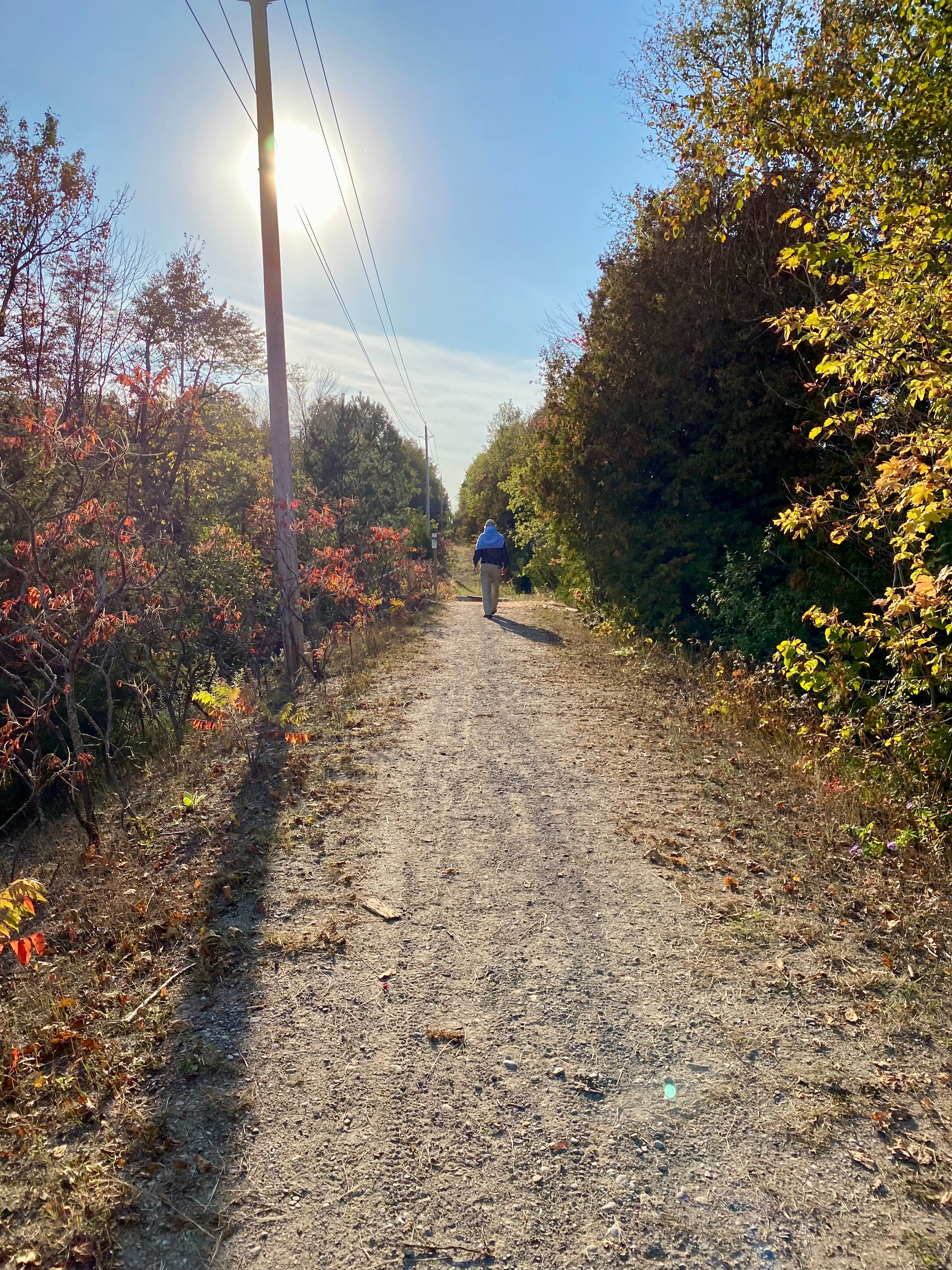
It’s probably safe to say that long before I ever began writing anything here in the Shed, I displayed some mild reclusive tendencies as child. Home was a happy place, and I was perfectly content to remain there. Had it not been for my father’s persistent efforts to push me into unfamiliar spaces, I suspect my life would look very different today.
One of the ways he did this was by volunteering himself as a Scout leader. Left to my own devices, I would have happily retreated into books and my mostly solitary hobbies, but Scouting—for all its present-day challenges—forced me to engage with other kids my age and with the wider world beyond my doorstep. At the time, I often resisted these excursions. Looking back, I can see that they were among the most formative experiences of my youth.
One of my favourite memories of those years was the weekend Dad made us all hike along the old railway right-of-way from the village of Orono into Stephen’s Gulch, a surpisingly deep ravine named after a local pioneer who built one of the first water-powered mills in Ontario.
We only made this journey once, in preparation for “CJ ‘85”—a week-long national scout jamboree that was to be held outside of Guelph later that summer.
“You need to learn how to cook for yourselves,” he said.
We assembled single-file outside the town hall in Orono, strapping on disproportionately large backpacks that seemed better suited to an Arctic expedition than a weekend of camping. Sleeping bags were wrapped in blankets and lashed to packs. Boots were checked. Canteens rattled. Then he marched us down Main Street, past the village cenotaph, and wesward along Station Street.
To our young minds, we were explorers setting out for the wilderness. To my father, I suspect, we were soldiers headed to battle in a war against adult co-dependency.
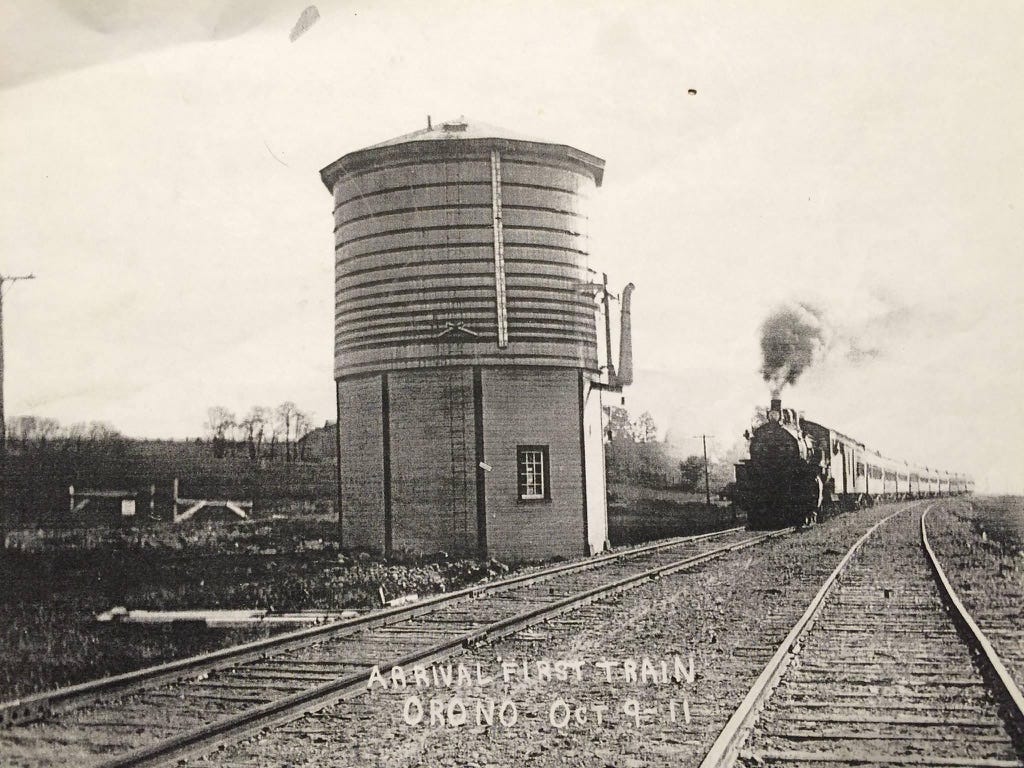
From there we marched westward along the former route of the Canadian Northern Ontario Railway, through the Orono Crown Lands—across high embankments and over old stone arches spanning streams and low ground. And there, finally, long after my feet were tired, we arrived in the gulch, made camp for the night and prepared something he called “goulash” over a couple of beat-up Coleman stoves.
Thankfully, the grade was easy.
At the time, I knew nothing about the railway itself. What I do remember was the feeling that we were walking through a forgotten pathway built by people long gone, yet still somehow present in the shape of the land.
Half a century later, portions of that line can still be walked in and around Orono. The rails are gone, but the route that once connected Toronto to Ottawa via Port Hope remains surprisingly visible to anyone who knows where to look. The land still remembers this quiet corridor.
I was especially impressed by ruins of the pillars that once supported a large steel trestle over Soper Creek. Even as a kid, it was impossible not to wonder about the scale of the railway that had crossed there and the sheer effort required to build it. The bridge abutments remained in the creekbed, standing silently among the trees as evidence of a time when trains regularly passed through the countryside carrying goods and passengers between Ontario’s two largest cities. I tried to imagine a fire-breathing locomotive traversing the invisible span overhead—it’s whistle echoing through the valley below.
But I also felt a certain sadness. How could such a large feat of engineering have been abandoned? Why would anyone leave something so substantial behind?
In hindsight, the answer lies partly in the speculative nature of railways themselves. The entire concept of a railway—not unlike today’s massive investments in artificial intelligence or nuclear fusion technology—was a gamble based on imagined possibility. Early rail lines forced people to rethink their relationship with time, space, and capital.
The grade we hiked that day felt easy because hundreds of labourers had already done most of the difficult work. Long before we arrived with our Scout packs, surveyors, engineers, labourers, and contractors had cut through hills, filled ravines, hauled timber, erected bridges, and shaped the land so that locomotives could move through it at the gentlest possible slope. Decades after the trains disappeared, the geometry of their work remained: frozen intentions etched into the glacial moraine that surrounds Toronto.
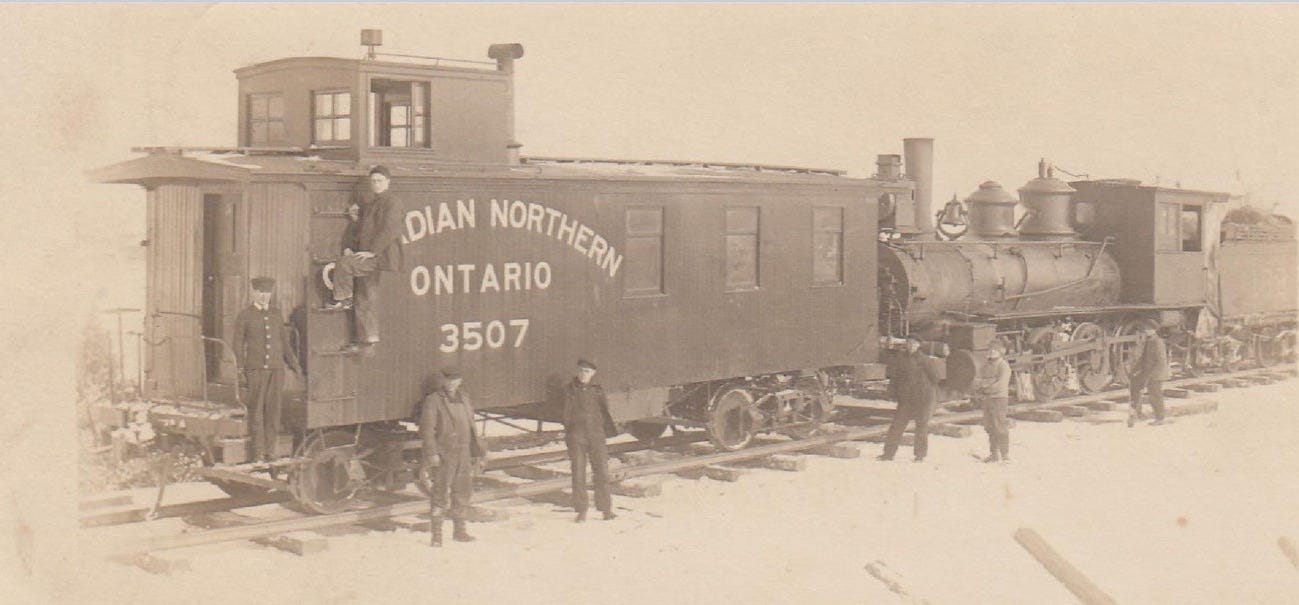
Perhaps that is why the abandoned bridge over Soper Creek and local rail history continues to fascinate me to this very day.
The builders almost certainly imagined that the railway would endure indefinitely. Most builders do. Yet history often has other plans. Some lines are declared redundant. Unnecessary. Steel is removed. Ties rot. Rails are lifted. Traffic shifts to highways. The railway becomes a trail. The trail becomes a memory.
And yet something survives.
A narrow corridor still guides footsteps.
The embankments still shape the land.
The line still provoke wonder of a different sort.
What once bore the weight of the “iron horse” now carries hikers, dog walkers, and curious children who can watch rainbow trout and transplanted Chinook salmon navigate dozens of kilometers north from Lake Ontario to continue their circles of life.
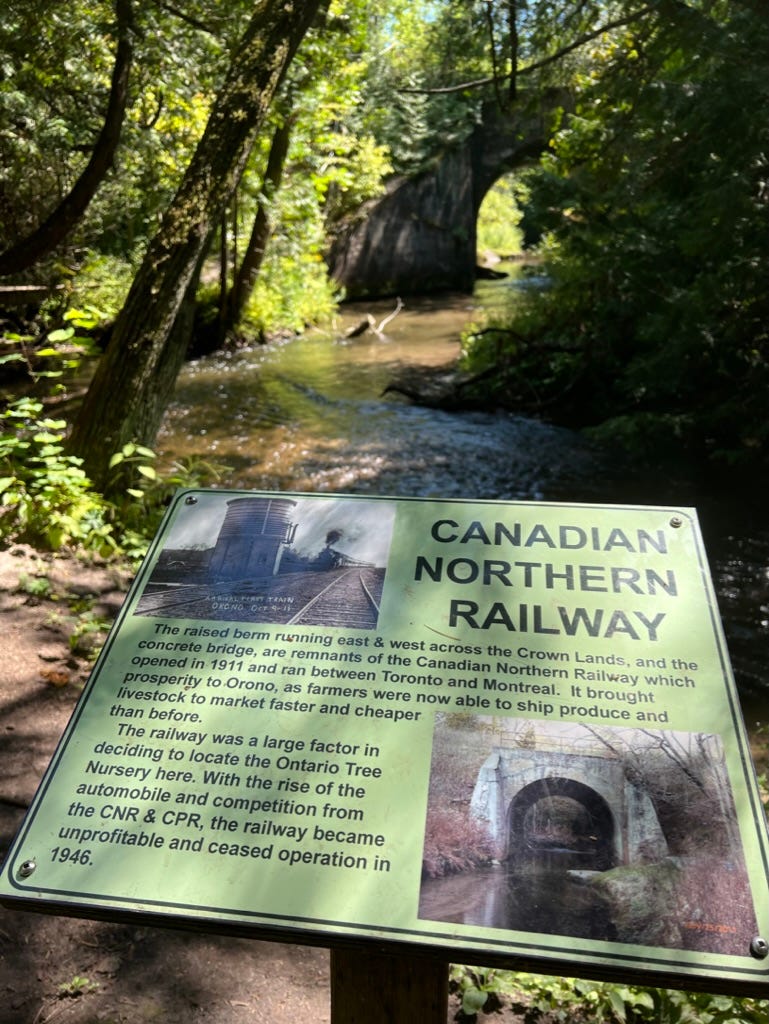
In that sense, the Orono subdivision of the Canadian Northern was never entirely abandoned. It has simply been transposed.
Old rail trails remind me that human works often outlive the reasons they were built. Their original function may disappear, but something of the structure remains, quietly influencing people and communities who come afterward. A railway corridor becomes a footpath. A bridge foundation becomes a monument. An engineering project becomes a story.
On that weekend my father led a troop of boys along a route created by people we would never meet. The trains were gone, but their work remained beneath our boots.
The railway had become an inheritance, if only by instilling in me my Dad’s love of local history.
And perhaps that is what I felt, even then.
Not merely the sadness of infrastructure lost, but the strange comfort of discovering that effort can persist long after the original context has changed. The builders of the line could not have imagined a group of Scouts hiking through Stephen’s Gulch a century later.
Yet there we were.
Following a path they had left behind.
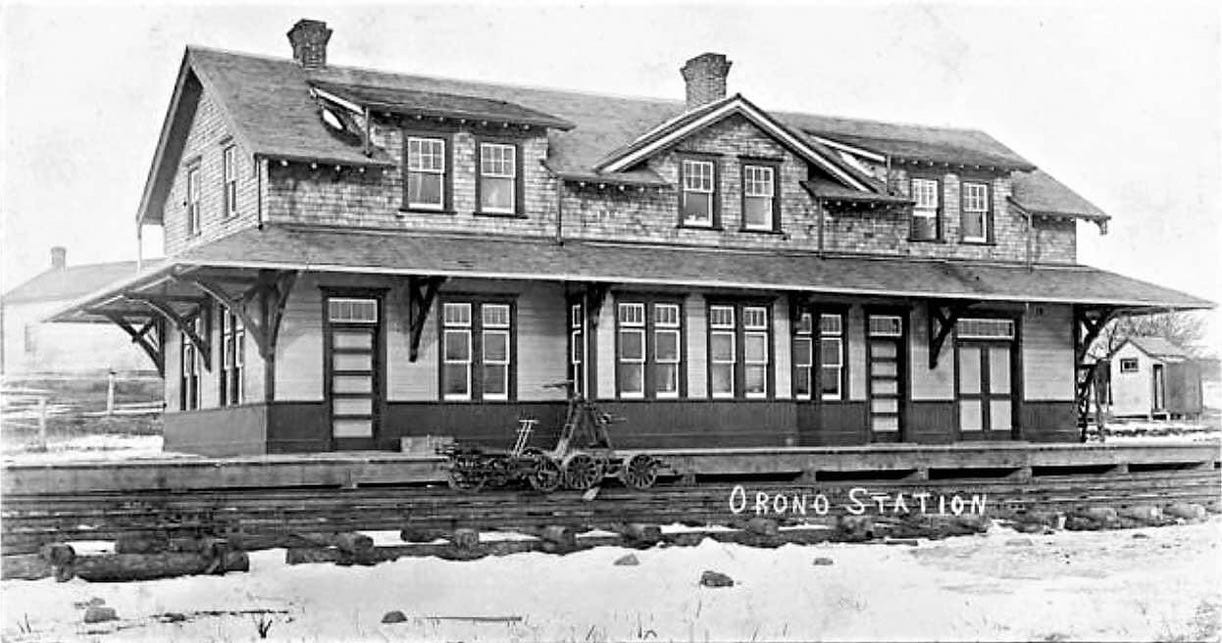
For a few mileposts west of Orono, the old railway had carried passengers once again.
So did you ever learn to cook? Can you make goulash?
Fabulous, Rob. Lovely that your work is reminding us that the past is alive all around us, if we care to look around.