
The Lines Before Darkness
Apollonius of Perga, Shadow Bands, and the Great American Eclipse

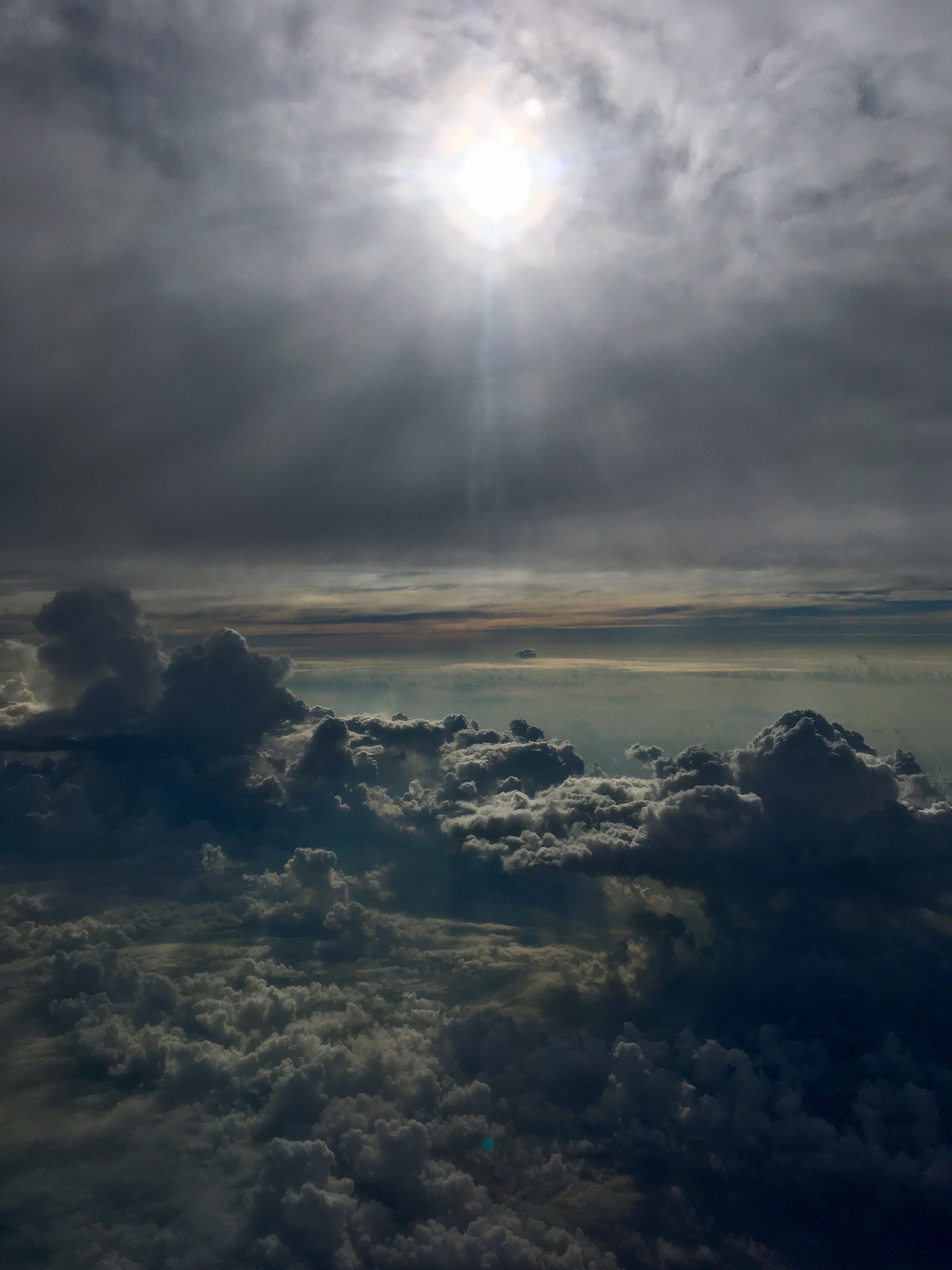
In August 2017, I found myself standing a little south of Nashville, Tennessee, waiting for the Moon to cross the face of the Sun.
Like everyone else gathered there, I was looking upward.
What I remember most, however, was not what happened in the sky.
It was what happened on the ground.
As the last sliver of sunlight disappeared, strange lines began to race across the pavement. They looked almost like ripples moving across the bottom of a swimming pool. Bands of light and shadow flowed silently over the earth. For a few moments they were everywhere. Then totality arrived, the Sun vanished, and darkness fell.
At the time I had no idea what I was seeing, but I’ve since learned they are called shadow bands.
The explanation is surprisingly simple. As the Sun becomes a razor-thin crescent, its light passes through the turbulent atmosphere above us. Tiny variations in temperature and density bend the light ever so slightly, creating moving patterns of brightness and darkness on the ground. The atmosphere itself becomes visible, not directly, but through the way it shapes the last remaining sunlight.
Most of the time these patterns are hidden.
The Sun is too large, the light too abundant, the signal overwhelmed by its own source.
Only when the light is reduced to a narrow thread do the invisible structures reveal themselves.
I have been thinking about those shadow bands recently because they seem to illustrate a lesson that appears again and again in science, mathematics, and life.
Often we imagine that understanding comes from adding more information.
But sometimes it comes from taking information away.
A bright noon sky hides the stars.
A crowded room conceals a quiet voice.
A torrent of data obscures a pattern.
The atmosphere over Tennessee had been there all day, but I did not see it until almost all the sunlight was gone.
A few weeks ago, while browsing a local used bookstore, I stumbled upon a copy of The Works of Archimedes. It was not a book I expected to find, and certainly not one I expected to buy. Yet there it was, tucked among the shelves, its cover displaying a geometric figure composed almost entirely of lines, intersections, and relationships.
No mountains.
No rivers.
No people.
Only traces.
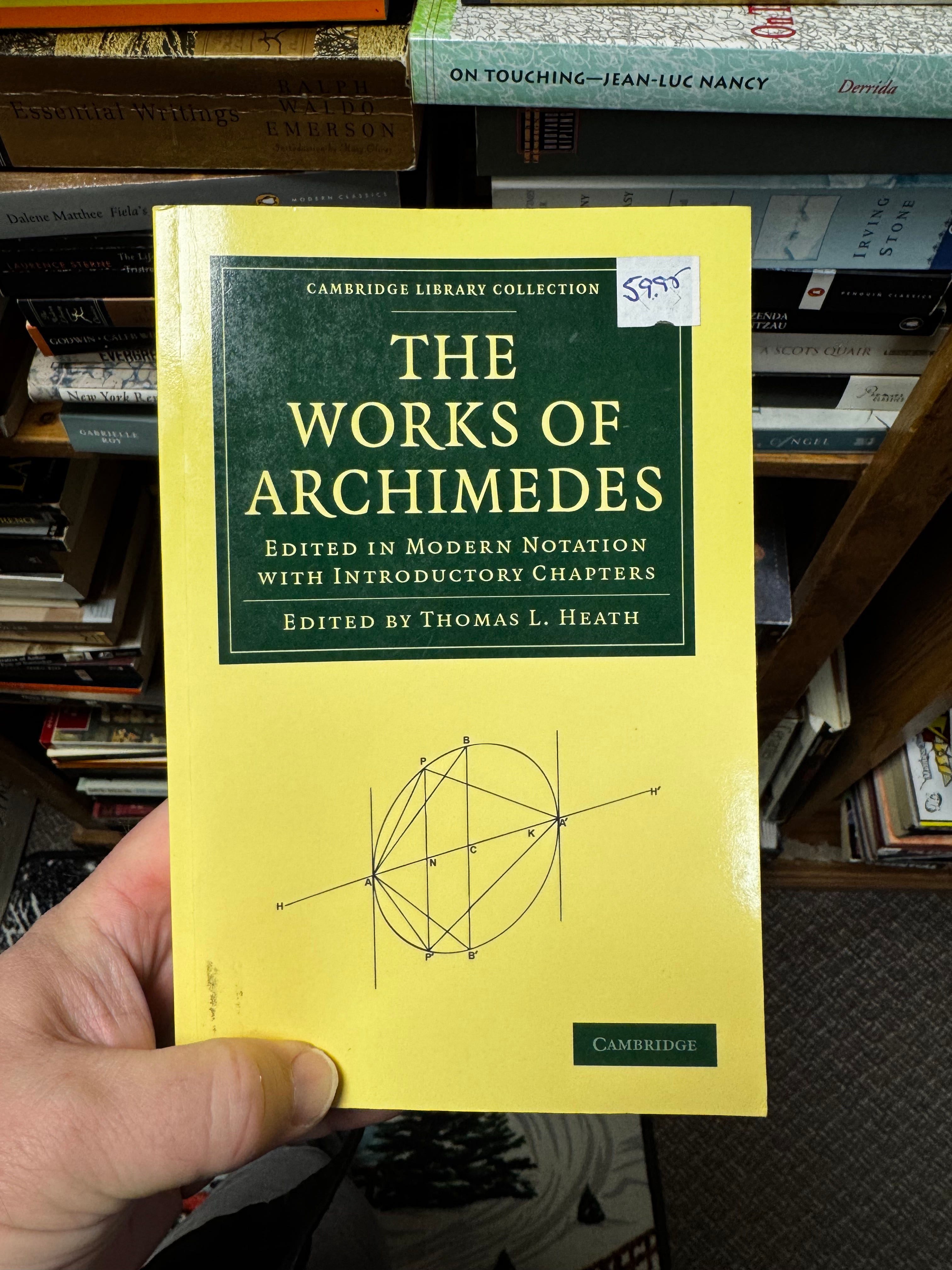
Holding the book in my hands, I found myself thinking about the ancient geometers and the strange way they looked at the world. Before long my thoughts drifted from Archimedes to Apollonius of Perga, and from Apollonius to those mysterious lines that had raced across the pavement during the Great American Eclipse.
At first the connection seemed improbable. One was an ancient work of geometry. The other was a fleeting atmospheric phenomenon observed during a solar eclipse.
Yet the more I thought about it, the more they appeared to share a common lesson.
More than two thousand years ago, Apollonius of Perga discovered that some of the most important forms in geometry are not objects but traces. The visible curve is not the underlying reality. It is the contour left behind by a deeper geometric relationship.
Apollonius spent much of his life studying what later mathematicians would call loci—places defined not by substance but by relationship. Standing in Tennessee during the eclipse, I found myself wondering whether the shadow bands were something similar. They were not things in themselves, but visible traces of an invisible structure passing overhead.
In a sense, the bands themselves were not the phenomenon. They were only traces. The atmosphere was the reality. The lines were simply the visible locations where an invisible relationship became momentarily perceptible.
My writing here in the Shed began there as well, though I did not realize it at the time. Long before I began writing about crystals, magnetite, resonance, or artificial intelligence, there were places that I returned to in memory. A red house, a shed, a small village that I once called home.
They were more than locations.
They were memory coordinates.
Places where relationships accumulated and meaning became stable.
Perhaps that is why the shadow bands felt strangely familiar.
For a few moments, the ground itself became a map of invisible relationships. The moving lines were not objects. They were loci—temporary places where sunlight, atmosphere, and observer intersected to reveal something that had been present all along.
The same lesson appeared in a very different setting during the Second World War. At Bletchley Park, north of London, mathematicians, linguists, engineers, and cryptanalysts worked to decipher encrypted German communications. Among them was Alan Turing, whose mathematical insight helped transform codebreaking into a science of pattern recognition.
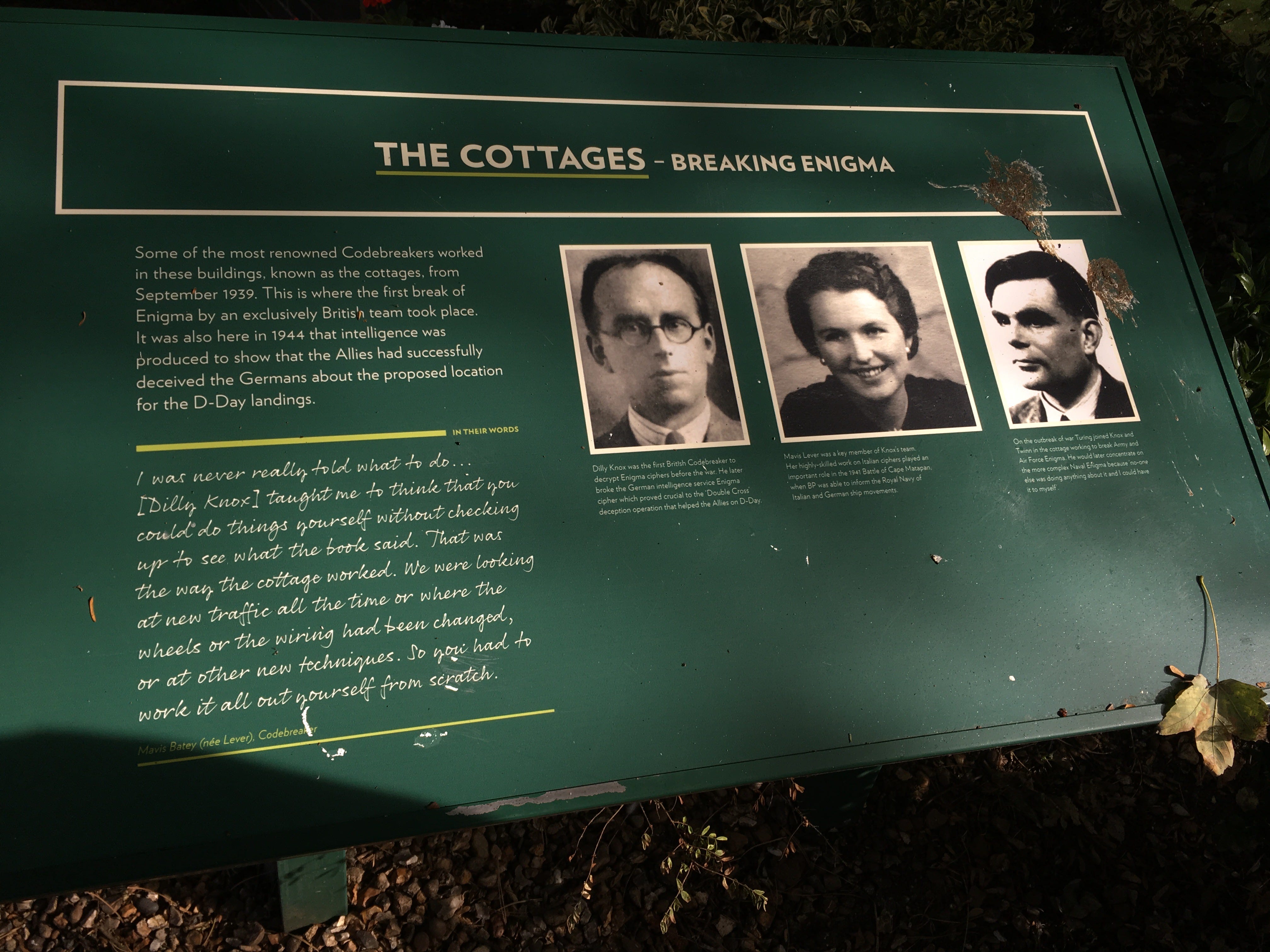
Turing and his colleagues were not looking for certainty. They were looking for faint signals hidden inside overwhelming noise. Their calculations of odds and evidence were attempts to detect a structure that could not otherwise be seen. Like the shadow bands of an eclipse, the clues themselves were not the reality. They were traces—small visible contours of a much larger invisible system.
The same thing happens in navigation. A sailor learns to notice the subtle movement of waves. A pilot notices a slight shift in the horizon. A bird senses a magnetic field. Orientation often depends upon perceiving signals that are almost invisible.
Here in the Shed, I have returned to this lesson many times.
The crystal reveals polarization.
The compass reveals direction.
The map reveals relationship.
The theorem reveals structure.
And the shadow bands of an eclipse reveal the invisible atmosphere through which all light must pass.
Perhaps wisdom works the same way.
Most of us spend our lives searching for brighter lights. Yet some truths only appear when the familiar light begins to fade.
Standing in Rutherford County that afternoon during the Great American Eclipse, I thought I was there to watch the Sun disappear.
Instead, for a few brief moments, I was shown something that had been present all along, but of which I had been unaware until that point.
The lines were never the thing itself.
They were only traces.
I simply needed less light to see the contour of those invisible realities.
—RDCX | 06.17.2026 | #talesfromtheshed✨
Shed Guest Bio:
Apollonius of Perga (c. 240–190 BC): The Geometer of Relationships
Apollonius of Perga was one of the greatest mathematicians of the ancient world. Living during the Hellenistic age, he transformed geometry through his monumental work Conics, a study of the curves produced when a plane intersects a cone.
Yet his deeper contribution was philosophical as much as mathematical. Rather than treating geometric figures as isolated objects, Apollonius sought to understand the relationships that generated them. His investigations into loci—places defined by geometric conditions—helped establish a way of thinking about form as the visible expression of an underlying structure.
More than two millennia later, his ideas continue to echo through mathematics, astronomy, physics, engineering, and navigation. He is remembered here in the Shed not merely as a geometer of shapes, but as a geometer of relationships.